Monday, January 03, 2011

Saturday, November 27, 2010
War and worship

As we drove into Omraneya yesterday, Sharshar joked that as soon as enters areas filled with Toc-Tocs, he feels that he is no longer under the authority of the Egyptian state. Two events this week proved how wrong he is, and how right.
156 young men were issued 15-day detention orders on Thursday for charges ranging from failure to produce personal identification to attempted murder. They were taken at various points on Wednesday, during demonstrations against an order to stop the construction of a church in the area. The state responded with its usual light-handed approach: teargas, bullets and mass arrests. Two men died, 19-year-old Makarios was pronounced dead on arrival in hospital. Mikhail died at midnight on Friday night according to the Al-Ahram newspaper.
Omraneya reminded me of nearby Mounib and Imbaba where I went Friday evening. In both, entering feels like going into a maze whose pathways gradually become narrower and less well defined. There is a feeling of being sucked into these places, over and under bridges, and above all a sensation that they are cut off and contained, by natural boundaries of foul-smelling canals and rivers, and manmade obstacles, usually over-arching, monolithic flyovers. These are the original gated communities.
The flyover next to Omraneya is the Cairo ring road, a highway that, amongst other places, takes its users to the luxury Carrefour shopping complex, international schools and expensive housing developments. When demonstrators from areas such as Omraneya rise up (quite literally) and block the ring road – and such incidents are not infrequent – the act is hugely symbolic. Car-owning commuting middle-class Cairenes are confronted with an explosion from the under(neath) world. And, temporarily, it is the latter who hold power.
This isn’t surprising given the amount of living that goes on outdoors in Egypt. I don’t want to pronounce on whether this is unusual or not, because I haven’t travelled enough to say whether it is or isn’t, but on the October bridge Friday night I saw two weddings, umpteen number of courting couples and, best of all, a young man standing on the back of a parked pick-up truck dancing with assured abandon the hip-rolling dance of Shaaby music. Earlier on in the evening I saw a man drink Turkish coffee out of a pristine china cup in the middle of mechanics’ detritus and rubbish and the general heave ho of humanity on a main road. It’s not an original point, but life, including the mundane and the mad, happens most vividly on Cairo’s pulsing arteries.
But permanent control of public space is something else. And sometimes even private space isn’t private, as Omraneya’s Copts discovered. And the arbitrating factors in all this are almost always money and influence. Which are the same thing.
When we asked a man for directions to the Marmina Church in Omraneya he said “turn right down the street which has tarmac”. Tarmac is a landmark in this warren of alleys of jaw-juddering surfaces. Further inside, and as we entered an area where two churches lie in close proximity, the demographics changed perceptibly. Virtually every shop displayed pictures of saints or popes or Jesus, the Muslim veil disappeared and on one street strung between houses was a giant picture of Mary. This isn’t remarkable but the sudden change struck me nonetheless.
The Marmina church was filled with agitated people. We were hustled inside by a man who seemed particularly nervous and, after asking the permission of a priest, he allowed us to speak to people about Wednesday’s events.


It was the usual heartbreaking tale of disappeared sons, fathers and husbands. When we arrived relatives had either not spoken to detained for 24 hours or received a fleeting phone call (policemen or other prisoners /paid can be bribed into letting detainees use their mobiles) from their loved ones informing them that they were being held in a place called Kilo Ashara we Noss. There were allegations of mistreatment in police custody. Lawyers had been prevented from representing the detainees during public prosecution office interrogations.
The charges levelled against the detainees by the police are almost identical to the crimes of which some of the Mahalla 49 were convicted after the events of April 6 2008: disturbing public order and security; deliberate destruction of property, illegal assembly, violent resistance and assault of police officers, illegal possession of weapons…In both demonstrations protestors who had come together spontaneously were put down by the security forces. There are pictures from both demonstrations of protestors throwing stones and Molotov Cocktails. In both demonstrations it is alleged that security forces used force first. In both demonstrations people were shot dead.
The Egyptian Interior Ministry in its obtuseness seems unable to comprehend that even if its officers do not regard shooting protestors dead as an egregious violation of the most basic tenets of human rights it is always a stupid mothafucking thing to do in publicity terms and particularly so four days before the elections.
You can see one relative talking here about her husband who was among those taken.
She also questions why the government has been so quick to stop the construction of a church when “there are a million mosques in Egypt”. The background to this is that there are wildly differing rules governing the construction of churches to those that regulate mosque construction. Owners of the Omraneya church are accused of “illegally” converting a non-religious building into a place of worship.
The government has yet to pass a unified law despite years of lobbying by rights groups, presumably because it fears a backlash from religious conservatives. Instead, it addresses these incidents by suggesting that a “hidden foreign hand” is at work trying to undermine the tightly knit fabric of Egyptian society. On this occasion minister Mostafa El-Feqy put the blame on Mossad. I hope he has been administered his pills and been taken for a lie down in a darkened room.
The regime’s response rang particularly hollow this time because unlike previous incidents of sectarian tension this was not Muslim vs. Christian. None of the people I spoke to suggested that their Muslim neighbours had been involved. Rather, it was the usual state vs. the people, sense vs. stupidity, power vs. the powerless.
Crucially, Omraneya as a whole is in informal area whose buildings were constructed without planning permission. The crackdown on the church understandably therefore raises allegations that the (unfair) law only applies to Copts.
There was a very different atmosphere at a “Day of Anger” march against police brutality I covered yesterday in Imbaba. The whole event had been kept top secret, ElBaradei organiser Abdel-Rahman Youssef refusing to disclose exactly where we were going even while we were en route, in a convoy. When we arrived I understood why.
Turning off the ring road we found ourselves in an area with a shockingly unmade road, and proceeded at 10 mph down a main street until we all parked and met other waiting activists. Once assembled, protestors produced whistles and pots and pans that they banged together producing a din matched only by the sound of collective jaws dropping around them. They produced anti-torture posters, of Khaled Said and Ahmed Shaaban, and then began marching and distributing whistles and flags to delighted children who skipped amongst them.

The whole thing was incredibly tense since as it grew bigger the demo blocked traffic. I expected the law to swoop down immediately but for over half an hour the circus went on, watched by bemused and confused residents and shopkeepers (I overheard people asking if the demo was an election rally, or a wedding). It was only after protestors had rapidly dispersed that three people, including an Al Masry Al Youm cameraman were arrested and briefly detained in Imbaba police station.
The lack of police response puzzled me. Careful planning may be one explanation but an important factor is that Imbaba is a working class area, access to which is difficult for large police trucks and where the police presence is less visible than say, downtown (although a network of police informants operates there as was obvious by the end of the demonstration).
Maybe there is something in Sharshar’s theory of Toc-Tocs and independent rule. Maybe these areas don’t interest the government because they are not usually centres of political mobilisation other than that of the Muslim Brotherhood (I’m basing this on the number of reports of political activity which come out of these areas).
The ordinary criminal investigations police have an interest in these areas as a source of young men who can be abused or tortured, either in order to make them confess to crimes they did not commit or for fun, or who can be hired as thugs to be used during protests, or hustled into polling stations on election days for money. Otherwise the physical evidence that government has forgotten, or is ignoring, or doesn’t know what to do with these areas is everywhere, from the unmade ground to the roofs of the unplanned and illegally built buildings which every now and then collapse, killing their occupants. Maybe there is a measure of freedom in the state’s absence, given the cruelty of what it does when it remembers.
Monday, November 22, 2010
Election (cam)pains

I had my first taste of Egyptian election coverage today, and it was foul.
I went to Shubra El-Kheima in north Cairo (although officially it’s in the governorate of El-Qalyoubeya, which should have been a warning – more about that later), a sprawling industrial district of 5.5 million people.
The metro station consists of a series of elevated pedestrian bridges one side of which is a busy dual carriageway and on the other a mess of market stalls and narrow streets and marauding tok toks, all covered in a haze of pollution and kebab smog.
The market side opens up into a bus station of sorts that then becomes a major road of chaos, startling even by Cairo’s standards. We entered a tall building which houses the clinic of Dr. Mohamed El-Beltagy, a member of the Muslim Brotherhood (and deputy leader of the Brotherhood parliamentary bloc) who is also the incumbent MP for Shubra El-Kheima.
The clinic’s waiting room walls are lined with a map of Palestine and framed photographs of Beltagy, mostly of him speaking in conferences. One was of him with George Galloway. Another was completely out of focus. Above a desk in the clinic was a sign saying that receipts are not available no matter what the amount paid. A big ferris wheel is visible out of the waiting room window.
El-Beltagy himself was not there, having already hit the campaign trail, and his aides ferried us in two cars to the village of Meet Nima, some fifteen minutes and 100 years away from central Cairo.
We arrived to find El-Beltagy and supporters parading down a main street to the accompaniment of chants blaring out of a portable speaker thrust aloft a man’s shoulder. Laminated banners of El-Beltagy bobbed up and down above a crowd of youths and men.

This being a Brotherhood affair organisation was tight and conducted by men in suits who directed marchers through Meet Nima’s narrow, unmade streets. El-Beltagy meeted and greeted in that way that politicians do, all teeth and pumping arms. In between these islands of people the march continued through desolate alleys of mud and buildings that looked unfinished but maybe were finished. The chanting died down at this point because only crickets and cats were listening and El-Beltagy put his teeth away and conferred with the suits.
At one café a man seemed intensely irritated by El-Beltagy’s presence. I asked him what he thought of El-Beltagy and he said that he hasn’t seen him once in the five years he’s been MP for the area, and that he hasn’t done anything for it either. At this point I was politely encouraged to move on by an El-Beltagy aide.


A journo friend with me said that she was told that El-Beltagy provides free health care to constituents. I wasn’t able to establish this. Another resident told me that El-Beltagy campaigns vigorously on their behalf but that since spending decisions concerning infrastructure problems etc are taken above, nothing gets done.
At this point I got a phone call saying that there was a problem, two of my colleagues were being detained in a National Democratic Party building. It subsequently transpired that they had gone to interview participants in an NDP counter-demonstration and then found themselves forced against their will to remain in an office, in what was apparently an NDP building, or a building connected to NDP candidate (Megahed Nassar), one of four NDP candidates standing for election in Shubra El-Kheima. The NDP is no stranger to locking journalists up but usually in police stations and/or after a legal process, so this was slightly unusual.
My colleague’s camera was stolen by a man who entered the office and took his bag*. I told Dr Mohamed about what was going on and he said he would put lawyers on the case, but sometime later my colleagues were allowed to leave the building.
The march had ended at this point and two journalists I was with decided to go home while me and someone else planned to go to where my colleagues were waiting. An El-Beltagy campaign aide insisted that he would accompany us, in a tok tok. But there weren’t any, so as he mounted a motorbike which had appeared from nowhere he said he would go and bring them to us in a car. He got onto the back of the motorbike and buggered off, and I can still see his silhouette waving bye.
Two minutes later a man in jeans and dress shoes appeared and began asking bystanders waiting for tok toks if they were “with them” - i.e. us – before shooing them away and I realised that it was our friends from state security investigations. We were told to go down the road to where the two journalists who had attempted to go home had been stopped while in a taxi and been detained.
The usual bullshit then began. We were asked who we were and why we were in Qalyoubeya by the top guy who relayed all this information to “el basha” through his mobile while surrounded by around six men. He told us that we needed to permits to cover the elections (even though the permits we are required to secure only apply to November 28th, the day of elections itself) and that we should have “passed by” them before starting our work.
There were protestations about the fact that we do not actually need permits to work, which were rejected. All this was delivered in the tone particular to Egyptian state security officers, obnoxious bar flirt meets psychopath. I’m sure they receive formal training in it because the patter is always identical. Alternatively, maybe they are just sent to hang out in South London nightclubs on Friday nights.
As usual it took approximately 287 years for them to establish that I am a foreigner who is also Egyptian. What was weird though was that I was asked my name and I pointed out that the officer asking me this had my press card in his hand and it bore this information. He said “yes but I’m asking you”. Didn’t understand exactly what they were testing here.
The names of my colleagues’ foreign publications proved even more of a challenge but we got there in the end while all the time our names were being run through their big database of Miscreants and Threats to the Security of the Nation. We were then given another tedious lecture about permits and the importance of “reporting to the local police station so that police can protect you” before covering anything, before being allowed to go in a taxi they flagged down approximately 30 minutes later.
The lessons from all this is:
- I really should never return to Qalyoubeya, or at least not for journalistic purposes. We were stopped in an area very close to where Philip Rizk was kidnapped
- Don’t rely on political figures to help you out in practical ways - i.e. not leg it and leave you - if there’s no political capital in it.
- The regime will make it as hard as possible for journalists to describe the processes by which it has ensured that the results of the upcoming elections have already been decided. Darkness lies ahead.
* I got a phone call at 1 a.m. saying that the bag had been "recovered by the MB".
- I really should never return to Qalyoubeya, or at least not for journalistic purposes. We were stopped in an area very close to where Philip Rizk was kidnapped
- Don’t rely on political figures to help you out in practical ways - i.e. not leg it and leave you - if there’s no political capital in it.
- The regime will make it as hard as possible for journalists to describe the processes by which it has ensured that the results of the upcoming elections have already been decided. Darkness lies ahead.
Thursday, November 11, 2010
Spongebob Tearpants

It struck me yesterday as I watched on television young people destroying Tory Party HQ that Margaret Thatcher is almost exactly the same age as Hosny Mubarak, was elected prime minister only two years before Hosny took the throne and inspires equal levels of vitriol. Imagine if she was still in power 30 years later.
A journalist who has done a series on “Generation Mubarak” (in German. Google translate doesn't bugger it up too much) was at a protest I went to today at Cairo University. There weren’t many Generation Mubaraks there however, and in total not more than 100 activists demanding that the government respect a recent court decision and remove interior ministry security officers from Cairo University, which they have in their grip much in the way they have the rest of the country by the scruff of the neck.
The interior ministry didn’t get the memo about casual dress however and arrived in full riot gear, approximately 150 soldiers on active standby opposite the university and more hidden away in thirty trucks.
How fierce they looked, stacked up all in black with their guns and their helmets, lined up against the green mobile fortresses behind them. Impenetrable and unvanquished.

(As I was going home I went behind the line of trucks and saw a small group of the soldiers sitting on the ground, thin without their bullet-proof armour, tearing into bits of bread on which they smeared bits of cheese, or halawa. These conscripted souls are Generation Mubaraks, too).
One of the state security officers policing the protest was unusually fat. I remember him because he proved to be particularly unpleasant during a protest outside the Kuwaiti Embassy earlier this year. He likes to buffet people around with his very loud voice. He attempted to do so to a man who stopped opposite the protest and watch. The man turned out to be a Cairo University professor, with time to spare between lectures and unwilling to take any of his shit. He stood his ground and I thrust a voice recorder in his face. (Too knackered to translate. If a kind soul wishes to do so, please be my guest. And feel feel to correct Arabic spelling mistakes).
أنا بأتمشى كدا قدام جامعتي و كليتي و بأشوف آية المظاهرة دي و موضوعها أيه لأن هي لفتت نظري و أنا عندي ساعة، ساعة و نصف فاضي من المحاضرات
جاي واقف هنا شوية
على جانب
فهو قاللي انت بتلف كدا
عاوز تعمل دور
داخل بيبحث عن نيتي
بيعاقبني قبل ما أعمل الدور
أنا راجل واقف
زي ما هو واقف
يقوللي ممنوع الوقوف
هو كل حاجة في الدنيا بقت ممنوع؟
آية ممنوع الدخول و ممنوع البص و ممنوع التعليق و ممنوع الكلام و ممنوع الكل حاجة
ده سيايته و هو مكلف بهذا
Later the fat policeman attempted to push Aida Seif El-Dawla around with his voice but he picked the wrong person to mess with.

Aida asked him something along the lines of, “do you people not respect court rulings?”
“No,” he said, laughing.
He laughed later on, too, when a fellow journalist who I promised I would not out on this blog had an unfortunate trouser disaster in the buttocks area caused during horse riding (!) the previous evening.
“I know this is a weird question but would you mind looking at my backside?” the journalist said, and suddenly things were looking up. But actually I was looking down, at a large tear in his pantalon revealing some very upper thigh.
I confirmed that all was not well on the ranch and together we attempted to think of a solution. Being a professional he couldn’t just bugger off, but at the same time Egypt has enough problems without international correspondents wandering around exposing themselves to students. (Although this hasn’t stopped a certain gifted Guardian writer, ho ho. Only joking, Jack!).
Suddenly my eye fell upon a Kefaya sticker.

There is a use for this group yet, I thought. Lacking alternatives the journalist went for the idea and, while ensuring that Abdel-Halim Qandeel wasn’t looking, I procured a sticker and Kefaya suffered possibly its most ignominious trial yet.
Alas said journalist returned some time later and reported that his buttocks were rejecting popular resistance. By this point the trouser issue had become something of a talking point amongst demonstrators and fat security officers, and a protestor who made no effort to suppress his guffaws kindly presented my journalist friend with a safety pin. That too proved unsuccessful and for the rest of the afternoon my journalist friend walked around valiantly, if rather strained-looking.
Thursday, November 04, 2010
His Story

I had a day of history today at one and a half exhibitions.
1. Men 2aglak anta you ungrateful shit
The first was called “Achievements of President Mohamed Hosny Mubarak” (sub-caption: “He promised. And he delivered”. Like Cook Door) and was held at the premises of the Ministry of Social Development, a large expanse of space ruined by that blancmange type of characterless architecture which might also be included under the list of Mubarak’s achievements.
When we arrived a car park attendant confirmed that the exhibition was indeed on but that the exhibitors were packing up. Strange we thought, since the exhibit was advertised as running for three whole days, but pressed on anyway.
Arriving (at around 1 p.m.) at the door we saw flags being folded up, plants being carried away, display stands being dissembled. In short, all the signs of people wanting to leg it and start the weekend. Still there were some achievements left, visible by carefully avoiding bits of wood with nails sticking out of them and other construction debris.
The first exhibit consisted of pictures of Hosny, BFF Safwat El-Sherif, and boy king Gamal (at a post office counter in a casual shirt, perhaps inquiring about his stamps) surrounded by endless and dull text about the many achievements the National Democratic Party has realized under Hosny’s wise stewardship. It was a powerpoint presentation without the power. I had my picture taken with Safwat above my head, like a sinister hat. Moftases gave Hosny’s extended hand a high 5…etc.
Mounting a gynormous escalator we were conveyed upstairs where a live concert of Mohamed Tharwat singing “We Chose Him” for the president greeted us on a big screen. The concert dated approximately from 1991; Suzie had shoulder pads and Hosny’s jowls were still following orders. It turned out to be an exhibit by the Ministry of State Information. Two bored middle-aged employees watched the screen as a never-ending stream of people in cruise-style oriental fancy dress floated past, shook the royal hand and shared a quick laugh.

Most of the exhibits had gone by the time we arrived or were in the process of leaving. They were mostly arranged by governorate and ministry.

Ismailia had loads of pictures of Hosny. El-Wady El-Gedeed had dates. Minia had crystal. The Ministry of Agriculture had wool and handwritten informational posters.
Interestingly there was also a selection of pharonic artifact reproductions accompanied by a sign headed “Egypt’s Wish List”, like on Amazon. Underneath it were pictures of all the gear that foreigners have nicked and which Egypt wants back. Strictly speaking the failure to recover stolen items is not an achievement but in the context quibbling about this point felt like upbraiding a serial killer for swearing in public.

Downstairs there was a slightly interesting travel section about the 3rd Metro line (which will allegedly be completely finished in 2012) and the railways (which claimed that over 30 train stations have been renovated). This being Mubarak’s Egypt, there was an exhibit about a complicated spaghetti junction type flyover resembling innards, in Malawi, Minya.
For no apparent reason there was also a booth by Jaguar the car manufacturers. Achievement by proxy, perhaps, or is Hosny. The people manning the booth had buggered off by this point, obviously, so we couldn’t ask why it was there.
We left, none the wiser as to Mubarak’s achievements but armed with illuminating literature. One booklet listed all the “achievements” Alexandria has witnessed under governor Adel Labib, including basic infrastructural obligations such as installing a sewage system in Agamy and developing Alexandria’s streets.
Not yet completely sickened by seeing images of the president everywhere we then went up the road to the Panorama 1973 War Exhibit, a rotunda building whose sole purpose seems to be to ensure that visitors leave knowing less about the war than they did when they entered.
2. We’re off to Button Moon
Surrounding the rotunda is a pleasant garden filled with military craft replicas and parties of visiting school and college kids. There is a mural donated by North Korea.
Almost immediately upon entering one is confronted with the “souvenir” shop, consisting of miniature flags, Al-Ahly football club insignia and postcards of an assortment of personages including a wrestler I did not recognise and, appallingly, that army-draft dodging Michael Jackson-impersonating item popularly known as Tamer Hosny.

We were almost immediately ushered onwards by an officious man with a walkie-talkie who informed us that the “show was about to start”. Rounding the corner I was delighted to see full size tanks, and that a crowd of excited young girls in fluorescent colours were assembled on top of it, meaning that I could clamber all over it as well, and I did.

We were then shooed into the rotunda through a hall lined with a last supper type image of Hosny et al at a table doing war, as well as a sign on a door saying القائد COMMANDANT which I wanted to nick.
I couldn’t believe that they weren’t taking the piss with the first show. We parked our arses in a cinema type room, along with a party of college students, it all went black and then a loud voice started holding forth in modern standard Arabic. In front of us were some curtains. These then went back to reveal a miniature war landscape made out of papier mache. The voice boomed on and then stuff lit up and little model planes flew and tanks on sticks tanked and rockets rocketed in a frankly primary school project fashion which reminded me of this:
In fact Moftases and I buggered off early and attempted to go upstairs to the panorama exhibit which we had been told is where the real money is. Alas however the Panorama works on a strict conveyor-belt type system and we were informed that there was yet another show to sit through before we could ascend to the heavens. We had a look inside the cinema and it was yet more grim papier mache. Being extremely bloody hungry, but yet not hungry enough to eat a display of the 1973 war, we avoided the enthusiastic attendants and ate some Pot Noodles sold outside, but were foiled in that by the omnipresent officious man with the walkie-talkie who told us that we had FOUR MINUTES to eat before our party would go upstairs to the panorama. Then he stared at us and pursed his lips until we could stand it no longer and fled.
Inside we were given the rock star treatment and allowed to use the LIFT, (only cos there was noone else around) and we arrived in the darkest mothafucking place I have ever been in since I left the womb. Now I can truly empathise with the Chilean miners. The attendant advised us to sit in the middle (“the VIP seats”) and I experienced a mixture of emotions as I groped my way through the pitch blackness to a seat which a certain high echelon governmental posterior might have once graced.
The college party eventually arrived and sat down and then the bloody thing started to spin as we stared at an enormous scene of fighting in the 1973 war painted on the walls of the rotunda which then turned into a recreation using replica objects, creating a sort of 3D effect. I mean it was well done and everything but after about 5 minutes I started wishing they would either speed the spinning up that we could leg it without being apprehended by the bloody attendants. Particularly given that mix of the booming narration and nationalist songs was singularly uninformative.

In the event we stayed until the end when the booming voice stopped and we were plunged back into darkness like someone had accidentally pulled out the plug. Everyone filed out and went downstairs.
I didn’t expect to see any critical examination of the war but I didn’t expect it to be that chest-thumpingly bad. The worst bit however is that as usual the role of the men who actually fought the war – the men who died - is given only a fleeting reference. The big brass gets all the limelight. And everyone who sacrificed something for that war deserves a better tribute than the Panorama.
Thursday, October 14, 2010
Oh dear, leader

"ESMA3 EL KALAM!!!"
Today I attended a public gathering, in Egypt, of more than five political activists that did not end in mass arrests, acts of violence and a Gomhoreya article describing the incident as an act of willful disorder by foreign agents.
The world is not about to spin off its axis however; the “march” was organised by members of the May 4 Movement, a love-in for Hosny Mubarak which, on its Facebook page, describes that eternal gentleman as the “leader of the new thought brigade” and urges him or his son to sit on the Egyptian people for yet another five six years.
This being a pro-regime affair journalists were left in peace but we were screwed over anyway by being dragged out in weather so hot I imagine it is what the temperature would be like if hell invited the sun over for chili fajitas. We were then left to melt for approximately one hour. I sat opposite the Nour Mosque and watched two coffins thrust aloft a sea of hands go in and come out on their final journeys. I was struck by how quickly they moved. Much quicker than the traffic below which skulked past in its usual cloud of lead, noise and invectives.
The Mubarak lot eventually had the good grace to show up, an hour late, and assembled on the pavement opposite the mosque where they unfurled flags and printed posters and handwritten signs. Suddenly everything was a sea of Hosnies.


Everyone stood around looking at each other and wandering what to do until a Japanese journalist turned up, giving two “protestors” the opportunity to show off their English. A state security scribe sloped onto the scene with his clipboard like a friendless loser at the junior high ball and they went through Youssef, Oosha and numerous other variations before it was eventually established that the man’s name was Yushi.
I wandered around and had a look at the posters, which were laminated and very professional-looking indeed. Shame about the load of crap written on them. Then I thought a spot of interviewing wouldn’t go amiss and spoke to three men whose main arguments for supporting Mubarak can be summarised as follows:
1. There have been no wars during his presidency
2. He has built many bridges (as in actual bridges, not metaphorical bonds of peace)
3. Every Egyptian home now has more than one electrical device in it, unlike the 1970s when it was either a transistor radio or a telly.
I noticed that several of the protest “leaders” there had gold-rimmed, pimp, sunglasses on, and for this reason I initially had difficulty differentiating them from state security officers, with whom they were very pally. Cigarettes were offered around out of a silver and leather cigarette case. I overheard one bloke say “El 2akh men 2amn el dawla by2ol…” which is an interesting variation on the epithets applied to state security officers I usually hear at protests.
There were a couple of kids there. One embarrassed-looking 14 year-old had clearly been strong-armed into coming by his dad, a small, cheerful man in his sixties.
“aih ra2yek fe ebny? Negm” [What do you think of my son? He’s a star] he asked/told me.
The son had been thrust into a photo opportunity with an Imam and an Egyptian flag, in what seemed to be an attempt to show the breadth of national unity and complete absence of sectarian conflict in Egypt.


The man turned out to be quite interesting because he informed me that he was trying to set up a union for domestic workers. Alas the conversation soon went south.
MAN: I’ve been to the National Council for Women’s Rights about this but nothing’s happened.
ME: Why don’t you talk to human rights groups?
MAN: No, no. I don’t like them.
ME: Uhm. I know a good lawyer who’d be interested in helping.
MAN: I have a lawyer working with me. It’s Nabih El-Wa7sh.
ME: Good luck and goodbye.
Having exhausted every possible camera angle known to man and grown tired of hearing about bridges I inquired whether the men were thinking of doing any marching in the near future. Initially the journos were told that the march had been delayed pending the arrival of millions of Mubarak supporters.
Then a tall man in a suit and sunglasses dropped a bombshell. Security bodies had cancelled the march! He was asked whether he knew that this would happen before it was announced. He said of course he did but that he didn’t actually decide to start it here and that it was up to him he would have began it near the presidential palace “inshallah 200 metres away. That would still be a march”. However behind the obfuscation was the real probability that, like a man blaming erectile problems on the drink, they were simply embarrassed that no one had shown up.
They’re an odd lot these pro-regimistas. As they went on about peace and stability and free elections (yes, honestly) I kept expecting them to say ONLY JOKING! But they went on and on and their hearts and their heads seemed to be in it. I was reminded of a comment someone posted on my Facebook recently in which he said that he thought an account of torture and police harassment had been made up, cast doubt on whether Khaled Said had been murdered by the police and accused local human rights organizations of publishing lies for their own agendas.
Today’s march may have been a farce but it is easy to forget how representative their views are. Commentators always like to describe the Egyptian people as a pent up ball of fury on the cusp of revolution but this ignores the many people who, regardless of being shat on day after day either believe that the Mubarak status quo is better the devil you know than the one you don’t, are frightened of change, just want a quiet life or have bought into the idea of The Threat from Without (Salafi Islam, Hezbollah, men with beards in general, Israel, Palestinians, Algerian footballers, Facebook, GPS before it was licenced, Iran before Iran-Egypt flights were licenced, religious minorities, neighbours with which Egypt has to share Nile water, neighbours with which Egypt has to share a border, homosexuals, Western moral depravity, half-Egyptians, Saadeddin Ibrahim, the Chinese artificial hymen,) by which the regime has “justified” its existence, and its policies. Creating this immutable link between change and an existential threat to Egyptians’ well-being has been the regime’s master stroke.


A cheerful gentleman who engaged in mild banter with the pro-regimistas. "Saba7 el fol" he said when he saw me photographing him.
Friday, October 08, 2010
MAN BUYS HORSE, REMOVES BRAIN

CAIRO: A man who bought a horse and immediately removed its brain defended his actions this week, saying, “the decision is in the best interests of the horse and will in no way affect its performance”.
Pharmacist and part-time amateur dramatics enthusiast Sayed El-Baddie purchased the well-known horse, Constitution (15.3. hands) in mid-August. Constitution’s failure to appear at an equestrian show last Saturday set tongues wagging and on Sunday El-Baddie, from Dokki, confirmed suspicions that the popular horse’s head had been axed.
The decision was met with a storm of protest from Constitution fans who seized upon the move as yet another example of interference in equestrian affairs ahead of the 2011 gymkhana when young fillies will compete with old nags for the crown.
Controversy surrounding the gymkhana intensified recently when it was decided that during future gymkhanas, horses will compete in closed halls admittance to which will be limited to gymkhana organizers, and that judging will be carried out in secret.
While Constitution did not compete in the gymkhana, he was a familiar and well-loved figure at events, who in 2007 found himself at the centre of controversy when gymkhana organizers overheard him telling other horses that incumbent gymkhana champion “Immortal Heart” (12.1 hands), who has dominated the gymkhana for 28 years, “is in ill health”.
Constitution made the comment during a dressage event when Immortal Heart’s left front leg appeared unnaturally stiff.
As he flogged an immobile Constitution yesterday, El-Baddie maintained that his decision to remove the horse’s brain was motivated solely by the desire to “make things even better than they already are”.
“Nothing has changed. Constitution will take the same salary, will continue to attend equestrian events and remains an important figure in the horse world. The only difference now is that he’s dead”.
Monday, September 27, 2010
Seeing is deceiving

The past 10 days have been an extravaganza of seeing things differently, on a personal level and for the nation as a whole.
On the personal level
I had Lasik surgery done, finally. No more chasing contact lenses around the back of my eyeballs for me. For those of you thinking of doing it I say, “Proceed” while noting that at one point you go blind briefly.
Luckily for me I had a very nice doctor who talked me through every stage of the operation (at least during the first eye) in insistent detail like a real estate agent attempting to sell me a penthouse. I didn’t know however about the aforementioned temporary loss, so when Dr announced “you’re going to lose your vision”…“Haa, has your vision gone?” It all got a bit Clockwork Orange and I was startled, to say the least, as all before me turned black.
The hospital where I had it done has a streamlined conveyor belt approach to its patients, rather like a processed cheese production line. The human element did emerge at a few points however, such as when the accountant asked my nationality and I said Egyptian-British (the order varies, I say whatever come out of my mouth at that particular moment) and he interrogated me about my parents’ origins. When I explained that my father is from England he said “ahh, British-Egyptian then” with no further explanation, and sent me on my way with a file number.
Then when I was having a repeat last minute test of the curvature of my cornea I enquired why the repeat test was necessary the technician said, “el doctor talab reblay” [your doctor has requested a replay]. Maybe this is ocular terminology, I don’t know.
Moftasa noted that the porter who was portering me about the various floors for blood tests etc had “toz” [difficult to translate, but in essence two fingers up at the world] conspicuously written on his hand in biro, which offset all and any discomfort endured that day.
The best bit however was immediately after the operation when me and four other processed cheeses who had also been Lasiked were instructed to sit in a group of chairs outside theatre, while Dr finished off other patients.
The way it worked is that the patients on their way to theatre walk past the newly-Lasiked people, which is fine except that we were all in various stages of discomfort after the operation and – from what I could tell when I was briefly able to open my eyes – we were mostly flailing around in silent agony, our faces contorted like an experiment in Cubism. The patients on their way to meet their destiny were thus forced to walk past a scene out of a Ralph Steadman dystopian nightmare.
On the national level
Anyone who has been within 10 yards of the Internet in the past two weeks will have heard about Photoshopgate, Al-Ahram’s misguided bit of Adobe meddling which the newspaper’s editor Abdel-Meneim Said subsequently described as “an expression of Mubarak’s position in the region”. The flood of “expressionist” pisstakes that subsequently ensued were described by Mr Abdel-Meneim as an “attack” on Egypt. Rather than keep his mouth shut until it all blows over he then informed us that the “re-orientation [SNORT] was well received” by the authorities.
There was more photoshopping of reality this week at the 2nd session of the Khaled Said trial. The ministry of the interior deployed the same pro-police “protestors” it had used during the last trial session, but on a much larger scale. I say protestors, but these were essentially Egypt’s answer to Millwall fans, a load of vest-wearing mullet-bearing dickheads who (as Moftasa said) for LE 50 and a strip of Apitryl were happy to turn up and spout out any old shit, namely that Khaled Said was a drug using army-evading criminal who (presumably, in their world outlook) deserved to die.

I attempted to talk to them through a police cordon (while dodging the wooden sticks they were throwing at the pro-Khaled Said demonstrators) but they refused to talk to any journalists, most likely because they had been ordered not to. That is if they were capable of rational speech.
The reason I was outside the court and not inside was that the wall of security officers surrounding the court told the press that the head of the court had ordered that we obtain his permission in order to enter. This obviously was a load of bollocks and I know this because it’s a common tactic. If you know the right lawyer - and depending on what mood the Interior Ministry has woken up in that day – the lawyer can talk you through the cordon, into the court, where you discover that the judge doesn’t give a shit about your presence or lack of it
So essentially I got up at the crack of buggery dawn in order to stand in Alexandra’s heat and humidity to watch the really sad sight of an image of Khaled Said being hit with a shoe by men in vests working for an interior ministry carrying out its version of damage limitation and in the process shitting on everyone.
The regime is aware of how high-profile this case has become. A friend who has contacts in the Interior Ministry told me that in the wake of the uproar about Khaled Said’s death officers were brought in and given a bollocking, told to calm things down for a bit. Not sure I believe this.
However the Interior Ministry did go to the trouble of mobilising the Milwall fans and printing a huge vinyl banner for them; because on the international level it still insists on that fragile veneer of respectability while behind its back it gives the finger to everyone at home. This time however its standards were really shoddy, and the whole spectacle was in essence a huge fuck you, world, we do as we please.
Wednesday, September 15, 2010
Update your history book
Al-Ahram* have disabused us of our misconceptions concerning important historical events in a series of pictures, below. Wael alerted us to the most recent important historical event, here.
أخرجتنا من أوهامنا جريدة الأهرام بخصوص مفاهيم خاطئة كانت لدينا بشأن أحداث تاريخية مهمة في سلسلة من الصور ، أدناه. وائل نبهنا إلى الحدث التاريخي الأخير، هنا.

الطريق الى مصر
The road to Egypt

الطريق الى هاستنجز
The road to Hastings
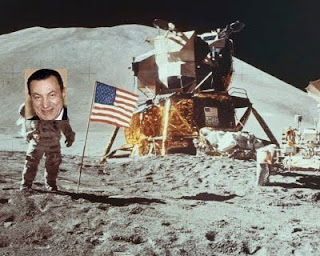
الطريق الى الفضاء
The road to space
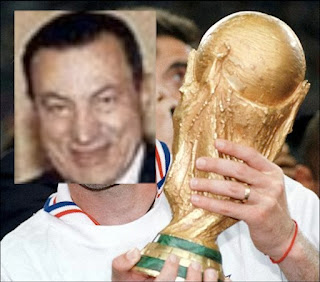
الطريق الى كأس العالم و العالم كله
The road to the world cup and the world

الطريق الى المجد
The road to glory
* Silly buggers have removed the picture now.
** Thanks to Moftases as usual for the technical assistance and translation of the big words.
أخرجتنا من أوهامنا جريدة الأهرام بخصوص مفاهيم خاطئة كانت لدينا بشأن أحداث تاريخية مهمة في سلسلة من الصور ، أدناه. وائل نبهنا إلى الحدث التاريخي الأخير، هنا.
الطريق الى مصر
The road to Egypt
الطريق الى هاستنجز
The road to Hastings
الطريق الى الفضاء
The road to space
الطريق الى كأس العالم و العالم كله
The road to the world cup and the world
الطريق الى المجد
The road to glory
* Silly buggers have removed the picture now.
** Thanks to Moftases as usual for the technical assistance and translation of the big words.
Sunday, September 05, 2010
A night in with Google Reader would have been better
I went to a cultural event in Cairo on Friday after a self-imposed hiatus following a dire evening at an open-mic “talent” evening some months ago which made X Factor auditions look like a Three Tenors concert. So much bile built up during that never ending 45 minutes that I could have saddled my inflated gallbladder and ridden home on it.
Friday night Natasha Atlas graced the Geneina theatre in Al-Azhar Park and while not a huge fan well it’s lovely to sit outside in a gentle breeze isn’t it. We arrived early, Natasha started late, Guns and Roses style. As her band walked out before she appeared, a heavily accented voice bellowed out “welcome to Egypt” possibly thinking that the female piano player was Natasha? Who knows. Natasha eventually appeared, festooned in what looked like Siwan (tent) material.
Her voice really is incredible and her band was mad tight but there was something missing, despite – or maybe because of the fact – that everything was perfect. It was just like listening to one of her records. It didn’t help that she spent the whole time sitting down (having apparently hurt her leg) and dancing on her chair in a manner resembling a child trying to contain urine.
There were two exceptions to this, but both however were marred by external factors.
1.The achingly beautiful “Black is the Colour (Of My True Love’s Hair)" which Natasha sang very nicely indeed (though no one sings it like Nina). Alas however seated behind me was a Blackberry-owning penis-featured obnoxious tosser who spent virtually the whole song loudly telling someone how to reach the Geneina theatre which meant that we heard:
Black is the colour of my true love’s hair
AYWA YA ME3ALLEM HA2OLAK TAWSAL EZZAY
His face so soft and wondrous fair
SHEMAAL FE YEMEEN
The purest eyes and the strongest hands
AYWA YEMEEN
I love the ground on where he stands
WE KHALEEK MASHY 3ALA TOOL
I love the ground on where he stands
EB2A KALEMNY LAMMA TAWSAL
Every last bit of romance was stripped out of the song.
2. "Riverman", again she sang this well (although not sure that the super vibrato worked) and the band were great, but it pissed me off that she didn’t mention that this is a cover, particularly given that Nick Drake spent his entire career plagued by depression and doubting his own ability (!) before topping himself – and then going on to enjoy posthumous success. Isn’t there some kind of protocol regarding giving credit where credit is due in the music world?
Twenty minutes into the concert my friends and I were already starting to get a bit itchy but the final push was provided by an interminable Tabla solo which was brilliant and everything but all a bit Youtube “Learn Tabla with Ali”-ish. There was a minor comedy moment before hand however when Natasha handed he mic over to Tabla player Ali, explaining that she and he had written a song together which was played at Ali’s recent wedding.
Ali then went on to precede his solo with a short speech in which he introduced “the most important person” in his life. His wife surely! No, his dad bounded on stage in a baseball cap and I imagined somewhere in the audience, a woman bristled.
Saturday, July 31, 2010
Rambling account of the trial today

Today’s instalment of the Abdo show began much as it went on, with the judge getting his handbag out and generally being irascible.
Shortly after it started someone who had not get the memo about the judge’s aversion to lenses used his mobile phone to take a picture. Someone told on him.
“HAATOOLY EL GEHAZ ELLY HOWA SAWWAR BEEH SAWA2 KAAN CAMERA AW MOBILE” [bring me the device he used to photography whether it is a camera or a mobile" the judge bellowed, surely with unnecessary precision about categories of electrical equipment.
Then the judge stood up and started gathering his belongings in a demonstrative fashion after reminding us that his courtroom is a photography-free zone. Lawyer Hamdy El-Assiouty remonstrated, explaining that the gentleman in question might not have been aware of the judge’s photosensitivity.
“E7na mesh fe Studio Masr,” [We are not in Studio Masr] the judge grumbled, but relented and sat down.
The first witness then arrived and off we went on a trip round Bizarreville which eventually ended with us driving off the edge of a cliff.
El Moqaddam Mostafa Hamed works for the Interior Ministry’s Internet Crimes Department. He explained that in February 2007 he got a complaint from Judge Abdo alleging that the Arab Network for Human Rights Information (ANHRI) and 17 other websites had published a statement that he considered libellous.
About a week after this he received instructions from the public prosecutor to investigate the websites in question.
El Moqaddam Mostafa explained that during his investigation he divided the websites into three categories:
1. The ANHRI website which originally published the statement.
2. Other websites which published the statement but did not allow comments on it.
3. Other websites which published the statement and allowed comments on it.
The judge then asked posed his first slightly alarming question: “Do you need special permits to access these websites?”
I hope I misheard the question because (as happened on several occasions subsequently) the answer had nothing to do with the question asked. El Moqaddam Mostafa explained that sometimes websites contain the information necessary to identify their owners and also that he is able to get complete data about a website from the first day it was created.
When asked whether he found any libellous phrases or words on the websites El Moqaddam Mostafa said that two websites allowed libellous comments. Negad El-Borei pointed out that one of the websites, Madha Ba3d ya Watany is not even involved in the case. El Moqaddam Mostafa acknowledged this and gave him the stink eye. As for the other comment, posted on naughty Amr “Mahmoud*” Gharbeia’s blog, it accused Judge Abdo of taking bribes and working for the police.
The judge then asked whether El Moqaddam Mostafa’s investigations revealed who owns the websites that allowed the comments. El Moqaddam began by drawing an incomprehensible (to me at least) analogy between websites and cupboards “El website zay el dowlab” before attempting to explain the concept of domains and sub-domains. Where the website is a sub-domain such as katib.org, only the domain owners know the website author’s identity.
The subject of comments and their authors required El Moqaddam to launch into an explanation of IP addresses (“el basma el electroneyya”) which is fine, except that at one point the judge said something along the lines of “The only thing I use the computer for is to write stuff”. The Internet did seem like uncharted territory for him, which was unfortunate given the subject matter he was confronted with.
El Moqaddam Mostafa explained that he “tried to summon Amr more than once. All we wanted him for was to access the control panel [don’t know what he meant] in order so that we could get the IPs of the people who made the comments”.
“But Amr didn’t come”, he said.
Gamal Eid then challenged El Moqaddam Mostafa to say where exactly in the ANHRI statement the word “stole” was used, saying that El Moqaddam had found that ANHRI accused Judge Abdo of “stealing”.
El Moqaddam countered that he had not used the word “stole” but “copied” (copied).
Gamal Eid then asked whether the ANHRI site allows comments, and whether it contained libellous material. El Moqaddam ignored this question and said the website owners are able to identify the authors of comments.
Another defence lawyer asked El Moqaddam Mostafa whether his investigations revealed the name of one of the defendants, Ahmed Seif (who is also accused of libel).
“I examined about 18 websites and his name might have been mentioned”, el Moqaddam Mostafa said. I wanted to ask whether his investigations might possibly have also revealed the name of Ronald Macdonald or Demitrious Roussos or Laika the First Dog In Space and whether their names should be added to the list of defendants.
Defence lawyer Negad El-Borei then asked whether Amr “Mahmoud” Gharbeia published the naughty ANHRI statement that accuses Judge Abdo of plagiarising 50 pages of an ANHRI report for his book on the Internet.
“I don’t remember. It’s all in the public prosecution office report,” El Moqaddam Mostafa replied most unsatisfactorily.
We then again set off into the unknown when Negad alleged that the Interior Ministry’s copy of the blog post in question by Amr “Mahmoud” Gharbeia might be faked because the comments do not appear in chronological order.
“The website owner controls comments,” el Moqaddam answered. Dr Moftases suggested that while this is not false, it’s not exactly the whole truth either, since comments which e.g. appear in this order:
February 7th 2007
February 5th 2007
February 8th 2007
…will only do so where the blog owner enables readers to vote on their favourite comments (which makes the comments appear in the order readers choose). Apparently Amr “Mahmoud” Gharbeia’s blog doesn’t have this function.
But there is also apparently something called the “nested comments” function which also makes comments appear in no particular order.
The next witness was a defence witness, Gamal Manaa, a former ANHRI employee who was in 2007 head of the research department.
Manaa explained that he identified the pages lifted from ANHRI’s report by Judge Abdo and not credited to them. He said that on February 13 2007 Judge Abdo rang Gamal Eid up and there was a long phone call, which was followed by repeated “annoying” phone calls.
Judge Abdo’s lawyer interrupted in order to demand that the court be told what Manaa’s qualifications are.
The next defence witness was Abdo Abdel-Aziz Hamada who explained that his job is to upload content to the ANHRI website.
Another worrying question was posed by the judge: “How exactly did the plaintiff lift/transfer content from the ANHRI report to his book?” Abdo said that he didn’t know but that the report was published on the net.
The judge then asked what harm was caused by the plaintiff using 50 pages of a ANHRI report word for word without crediting them, and asked what the correct procedures are for referencing material taken from the Internet.
I hoped that this was some kind of sophisticated legal interrogation device rather than being for informational purposes. But then I watched the judge dictate the witness’ answers to the court scribe (there is no stenography in Egyptian courts) and remembered his earlier comment about computers and thought glum thoughts.
Judge Abdo’s lawyer then demanded to know ANHRI’s working hours, whether the report was published in PDF format or Word and how long Abdo has been with ANHRI.
The pattern of this gentleman’s questions reminded me of those Facebook “20 things you didn’t know about me” questionnaire things posted by the unemployed such were their randomness.
Abdo said that it was clear that the report had been plagiarised because identical spelling mistakes were reproduced in Judge Abdo’s book.
Asked about the significance of the PDF/Word distinction, Judge Abdo’s lawyer made the astonishing claim that it is impossible to copy PDF files which even I know is codswallop.
At this point defence lawyers wanted to summon more witnesses but the judge announced that he would need time to read the case file before questioning these witnesses, prompting the outrage of Hamdy El-Assiouty.

This man stood in this position for about 10 minutes without moving. His look of hopelessness sums up the whole day
Things got rather tense and in a moment of high action the judge tersely declared that the case was adjourned until 26 September before exiting stage left, leaving defence lawyers enraged.
Off we buggered out of the courtroom but then a lawyer friend told us that the judge was now summoning witnesses and we went back in and there then followed a series of events.
Then lawyers said that the judge was demanding to hear the witnesses in a closed session WITHOUT LAWYERS, sort of a la Guantanamo.
Lawyers of course refused.
Then lawyer filed a “talab el radd” which is when they demand that a judge be changed.
It was announced that the demand would be considered on September 4 2010.
Then defence lawyers drafted a letter requesting that the talab el radd be withdrawn.
Then we hung around for absolutely ages and eventually went home when it was announced that a decision would be reached by the court the next day.
One lawyer I spoke to was a bit confused by the decision to change the judge since in October judges are all rotated anyway and someone new will hear the case.
I was more or less confused by everything.
Here is what Gamal Eid had to say about it all.
*Private joke too tedious to explain here.
Wednesday, July 28, 2010
Pane

I lived in Alex for a year at the beginning of this millennium, and it was one of the best experiences of my life: heat-filled, carefree and of limited duration.
Revisiting the city for the first time after I left it was unexpectedly painful, what with the bumping into the memories and all that. It is a still wonderful city - and one I became attached to far more intensely than I will ever feel fondness for stinky, crotchety Cairo - but with each visit it has become less and less mesmerizing, and is almost now a stranger where once it was my partner in crime. Reduced to someone I would nod my head at in greeting in the street.
The city was intensely unfamiliar when Sharshar, Um Nakad and I arrived on Monday evening. The intense emptiness of the night’s black sea was still there - but it emitted a putrid stench of piss and sweat. The corniche’s buildings, the old soldiers, still stand sentry duty - but are pockmarked and wind-lashed and exhausted. At their feet are the crowds, Alexandrians and holidaymakers happily promenading in the evening’s sticky, cloying air - but I don’t remember seeing so many beggars in Alex when I lived there.
But then memories of places are always carbon copy versions, a faulty imprint of geography and time and emotion.
I was in Alex for the trial of two policemen being tried for misuse of force against Khaled Said, who died when they apprehended him in an Internet café in June. The courtroom was absolutely filled with both media and relatives and friends of the two defendants. Angry-looking women occupied one row. One remonstrated aggressively with the tea-seller about the LE 4 change he had still not brought her. When I squeezed past them in order to take a photo of the defendants they hissed and mumbled in complaint. It was only when a slanging match broke out between them and a woman who is testifying against the defendants that I realized that they were relatives of Mahmoud Salah Mahmoud and Awad Suleiman.
At one point in the trial I had the despairing thought that as usual, justice is only going to be half done in this case; the two men will be found guilty but not of the crime witnesses say they committed (murder, or at least manslaughter) and that those higher up the chain of command will continue to sleep peacefully at night. The findings of the two postmortems performed on Khaled Said’s body have effectively locked the truth in a room to which the legal system doesn’t have a key, as I understand it. Maybe the judge will be different this time. I don’t have much hope of this however since a defence lawyer (who introduced himself as “general” so and so = ex police = regime) speaking after the trial described him in glowing terms.
After the trial we went to Trianon in Raml Square so I could write my article. Sharshar (who had not been allowed into the courtroom and was kept waiting in the sun for two hours) slept, Um Nakad made phone calls and provided invaluable legal assistance for my story.
There was a man in the corner of the café who talked in a loud voice and gesticulated in an animated fashion for the duration of the time we were there. I thought he was using a hands-free but later realized that he was talking to himself. He had a briefcase on the chair next to him. I wondered what was in it.
After I had finished my story I went to use the loo and on the way there saw that all the café’s staff were staring out of the window.
Street children/teenagers were fighting. As we watched through the glass one of them, wearing a baseball jacket, dragged a youth with no feet out of his wheelchair and proceeded to pummel him, assisted by two other children and a young man who came and went.
I stood next to the man talking to himself - whose stream of consciousness now centered on the fight - as it continued, the disabled man on his back, his stumps flailing wildly as the youth in the baseball jacket punched him in the head and the other children kicked him. A middle-aged man carrying a plastic bag stood and watched, half smiling, fascinated.
Separated by the café’s glass, the fight played out for people in the café in silence, and this was perhaps its most disturbing aspect: seeing the disabled man being dragged along the pavement by his shoulders, the empty wheelchair rolling, the fists cutting through the air, the vain attempt to resist, the dirty desperation of it all, how long it was, how long, and all mute.
Café staff eventually intervened and police arrived. The disabled man, now smiling, was placed back in his chair and the youth in the baseball jacket obligingly pushed the wheelchair accompanied by two policemen. Calm returned. I then noticed that the street kids had put pieces of cardboard in the opening of an unused underpass where the fight broke out, in addition to flowers in an improvised vase. A man kicked it all away on the instructions of the man from Trianon.
Um Nakad later told me that someone from Trianon told her that the disabled man had “opened up someone’s stomach last week and is no angel. Nobody intervened because they’re all scared of him. He might be carrying a knife”.
Maybe there will be a time in Egypt when it will be impossible to silence and conceal this everyday violence, when the glass sealing off desperation from people who can afford not to care will be shattered. I hope so.
Friday, July 09, 2010
الكبري ممنوع

Today there was another silent protest against police brutality, or at least there was meant to be.
I went along to Qasr El-Nil bridge ten minutes after it was meant to have started and encountered the usual scene of lovers staring cross-eyed and nauseatingly at each other while caressed by a gentle wind, but distinctly no protestors. The idea is that protestors all wear black and stand in silence/read the Quran or Bible for an hour, in a line. So far assembly points have been along the Nile, presumably because the presence of the aforementioned couples and other flaneurs both increases the profile of the protest and provides a protection of sorts. Because these are after all only individuals contemplating the Nile. Who all happen to be wearing black while standing in silence.
The filth had other ideas however. As I approached the Tahrir end of the bridge I saw a bunch of them standing by one of the lions instructing youths wearing black t-shirts to bugger off. I then wandered along the corniche below the bridge where 6 – 7 young men in black were positioned doing silence and contemplation etc. I assumed they were part of the protest. Up on the bridge meanwhile on one side even the non-political lovers were being moved on, and I overheard one officer say to pedestrians attempting to walk along the bridge, “El kobry mamnou3” [the bridge is forbidden] and felt like we were in some role-playing computer game and that we would have to find the golden chalice through the haunted forest.
By this point I had run into a journo I know, who was accompanied by another journo I didn’t know called Ahmed, who turned out to be demagh and droll. Me and Ahmed trundled around looking for the protest until we discovered that for some reason it was outside the Trade Chamber [el ghorfa el togareyya] in Bab El-Louq, so off we went.

There were about 20 people there who were immediately descended upon by a group of uniformed cops and plain-clothed nasties. It was “agreed” that the protestors (some of whom were not the usual activists present at almost all demonstrations, and who included a child) would leave in groups of three, which is what happened.
There was a minorly interesting moment when a copper asked a journo in a brusque fashion who he was and what newspaper he worked for. When said journo replied New York Times the tone changed considerably. I must remember to use this tactic.
There was more confusion after that as we wandered and wondered where to go, including a bonkers moment when some men in the street began exclaiming “a protest! A protest!” and “Ali El-Hashem has died!” and “We’re going to the Synagogue!” Two of them strode off while behind us another dragged one man off his seat while all laughed and lots of colourful descriptions of the mother of the man doing the dragging were bandied about. It was eventually established that these gentlemen had nothing to do with the cause, and that the cause had now (inevitably) moved to the Journalists’ Syndicate.
On the way there Ahmed described a protest by El-Baradei’s National Coalition for Change that he had covered a few weeks ago, participants in which – after being having been prevented from demonstrating by the police – decided that they would finish off their evening of activism by decamping to City Stars, a 5 star shopping mall. I don’t know if the anecdote is true, but it reflects an impression held by some that Dr Elbadz’s movement is somewhat elitist - or at least that it recruits individuals from certain social strata.
I thought very unchristian thoughts throughout the day as I observed the feeble number of people who had turned up for the protest, because on Twitter people were calling for “activism” by tweeting tweets about Khaled Said and the protests.
I still have some thinking to do about this and so don’t want to get my high horse out quite yet but I have a burgeoning belief that Twitter activism is something of an oxymoron.
Twitter is indispensable for communicating information and throwing light on issues ignored by the media big boys, but activism? How can writing 140 characters to (as most my followers are, at least) like-minded people constitute activism? Isn’t this like the Pope railing against abortion at a Catholic priests’ annual general meeting? Not that I’m blaming or chastising or judging or anything, I am all for people ranting against oppressive mothafuckas because it’s one of my favourite activities. I just object to the nomenclature. Getting something as a trending topic on Twitter is good and everything but it isn’t activism, it’s awareness-raising. To call it activism is a little bit of an insult to the people who interrupt their lives to go out on the streets, in the process exposing themselves to arrest and injury.
And here endeth the lesson.
Subscribe to:
Posts (Atom)
